Google Blocking APK Sideloading: The Android TV Box Crackdown Nobody Warned You About’s
Your Android TV box is about to change. Not in a good way, either. Google is blocking APK sideloading, and the clock is already running. Furthermore, most box owners have no idea it is coming. They will find out the hard way — standing in front of the TV, remote in hand, watching an install fail.
Let me explain exactly what is happening. Then I will show you what it means for your box.
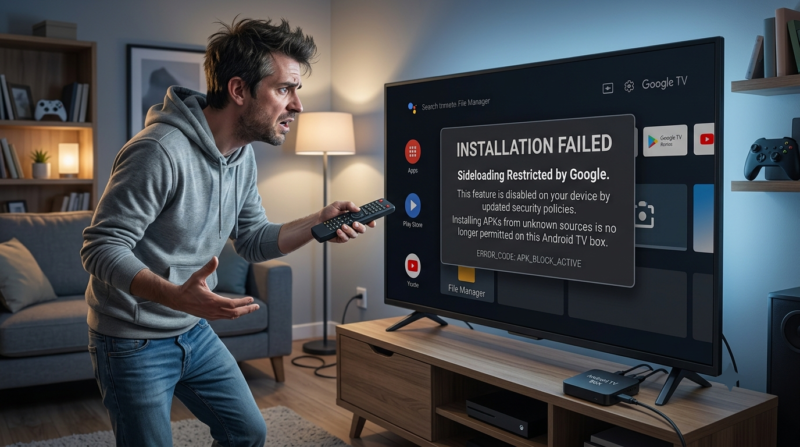
What Google Blocking APK Sideloading Actually Means
Here is the short version. Google now requires developer verification for Android apps. Every app. Not just Play Store apps. Sideloaded APKs too.
Think of it like an airport ID check. Google confirms who the developer is. It does not review the app itself. That sounds harmless. However, the consequences are anything but.
Developers must now register their real identity. That means legal name. Address. Phone number. Email. Organizations must also supply a D-U-N-S number, which can take up to 30 business days to obtain. On top of that, verification carries roughly a $25 fee.
Now ask yourself a simple question. How many of the APK developers behind your favorite sideloaded apps will hand Google their government ID? Exactly. Many will not. Consequently, their apps will simply stop installing cleanly.
The Timeline: Your Box Has Months, Not Years
The dates matter. So write them down.
Early access for developers opened in October 2025. Verification then opened globally to all developers in March 2026. The new advanced sideloading flow launches for users in August 2026. Finally, enforcement begins on September 30, 2026 in Brazil, Indonesia, Singapore, and Thailand, with a wider global rollout planned for 2027.
That is the part people keep missing. September 2026 is not the end. It is the beginning. Those four countries are the test lab. The rest of us are next. Meanwhile, the boxes on our shelves are getting quietly reprogrammed through Google Play Services updates.
In other words, you do not get to opt out by refusing to update. The advanced flow ships through Google Play services across all Android versions.
Which Android TV Boxes Are In The Firing Line
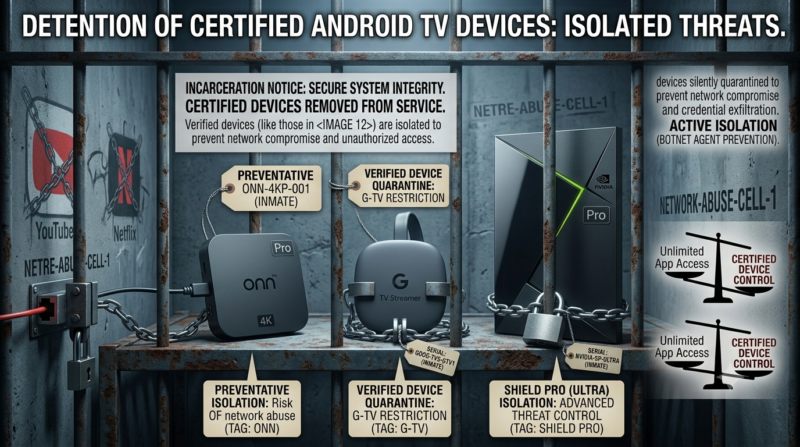
This is where it gets uncomfortable. The rules apply to certified Android devices. Certified means Google-approved. Play Store included. Widevine included.
Therefore the most affected devices are the ones people actually recommend:
- onn 4K Pro — certified Google TV
- Google TV Streamer — Google’s own hardware
- NVIDIA SHIELD — the enthusiast favorite
Notice the pattern. The better the box, the tighter the leash. Ironic, is it not? You paid extra for certification. Now certification is the thing restricting you.
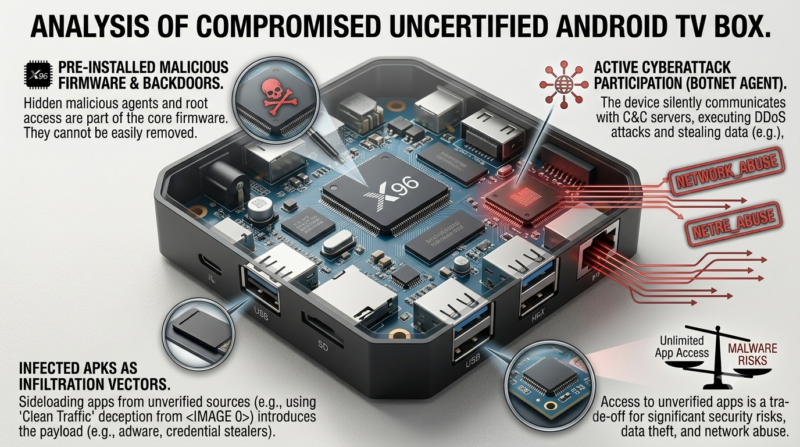
Uncertified boxes sit in a stranger position. They are outside Google’s certified umbrella. As a result, they may dodge the worst of it — at least for now. However, they also lack Widevine L1, official Netflix, and reliable firmware support. So it is a trade. Freedom on one side. Functionality on the other. Nobody wins cleanly here.
Google’s Defence: The Malware Argument
To be fair, Google has a case. A strong one, actually.
Google’s internal analysis found that malware is over 90 times more common in sideloaded apps than in Play Store apps. Furthermore, the company argues that anonymity is the root problem, because it lets bad actors distribute harmful apps and simply reappear under a new name after being caught.
Fake banking apps are real. Counterfeit messaging apps are real. Malware disguised as government apps is real. These things hurt real people, especially in markets where sideloading is the norm — which is precisely why Brazil, Indonesia, Singapore, and Thailand were chosen first.
So the security logic holds. Nevertheless, security logic and user freedom are not the same thing. And that is the whole fight.
The “Advanced Flow” Escape Hatch — And Its Catch
Google insists sideloading is not dying. Officially, sideloading remains fundamental to Android and the identity requirements are meant to protect users rather than limit choice. The company built what it calls the advanced flow so power users can still install apps from unverified developers.
Sounds like a win. Then you read the details.
First, you must enable Developer Mode in system settings. Second, the install path is deliberately hidden and multi-step. Third — and this is the killer — there is a mandatory 24-hour lock built into the process.
Twenty-four hours. To install an APK. On hardware you own.
Google designed that friction on purpose. Specifically, it is meant to defeat coercion scams, where someone pressures a victim into installing something harmful in real time. That is a genuinely good reason. However, it also means the casual sideloader — the person who just wants a media player on their new box tonight — is done. They will not wait a day. They will not dig through Developer Mode. They will give up.
And that, quietly, is the point. Sideloading does not have to be banned. It only has to be annoying enough that nobody bothers.
Why This Hits Android TV Boxes Hardest
Phones survive this. Boxes might not. Here is why.
The entire value of an Android TV box is the app layer. Nobody buys a box for the plastic shell. They buy it for what they can install on it. Sideloading is the product.
Moreover, the box audience is drifting here already. Amazon has been blocking third-party apps and patching exploits on Fire TV devices, which pushed a wave of cord-cutters toward Android TV and Google TV boxes in the first place. Now Google is closing its own door. So the refugees fled one walled garden and ran straight into another one being built around them.
Meanwhile, look at the trend line. Apple is being forced open in the EU. Alternative marketplaces. Third-party browser engines. Sideloading under regulatory pressure. At the same time, Google is tightening. The two platforms are converging from opposite directions. By 2027, the open-versus-closed distinction may barely exist.
That should worry anyone who owns an Android box.
What You Should Do Before September 2026
Do not panic. Do prepare. There is a difference.
Keep your APKs. Download and archive the installers you rely on today. Store them locally, on a USB drive or NAS. Already-installed apps keep running.
Learn ADB. ADB installs remain available and are not subject to the advanced flow. Consequently, a laptop and a USB cable become the serious user’s workaround. If you have never used ADB, now is the moment.
Check whether your box is certified. Certified devices get the restrictions first. Know which category yours falls in.
Support developers who verify. The $25 fee and the ID requirement will thin the herd. Legitimate developers who do register deserve your traffic.
Do not buy a “fully loaded” box. Ever. The hardware inside is usually generic junk. The real risk is the unlicensed apps bolted on top. Those sellers are about to get flattened by this policy anyway — and they will take your money with them on the way out.
The Bottom Line
Google blocking APK sideloading is not a rumor. It is a scheduled rollout with dates attached. August 2026 for the new flow. September 30, 2026 for enforcement in the first four markets. 2027 for everyone else.
Android’s openness was always its edge. It is the reason these boxes exist at all. Now that edge is being sanded down — carefully, politely, and in the name of safety. Perhaps that is a fair trade. Perhaps it is not.
Either way, the decision is not being left to you.
Stay tuned. I will be testing exactly how badly this breaks real boxes, and I will report back with what still works.