What Is Chinese Dreamcore?
Gen-Z in China are waking up to a reality that something is missing in their social lives and it can not be found in the future but in the past. Whilst AI is developing at an alarming rate and fuled by geopolitics, it’s also causing an overload of artificial, unreal, content that’s not compatible or is damaging the social fabric of many persons. And like something spun out of the popular Tron movie came the Chinese Dreamcore.
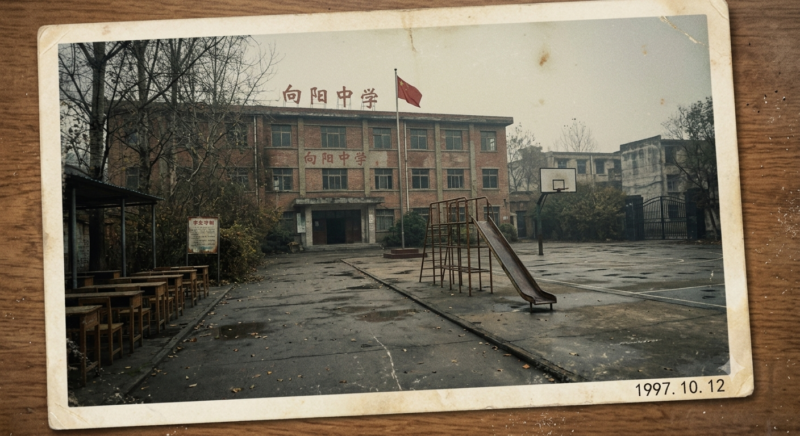
Scroll through Chinese social media long enough and you’ll eventually land on something strange and oddly moving: a grainy, slightly overexposed photo of a stairwell in an old apartment block, tinted amber like an old VHS tape. A shot of a squeaky see-saw in a schoolyard at dusk. The chime of an old QQ instant-message notification layered under a slowed-down pop song from 2005. This is “中式梦核,” or Chinese Dreamcore — a homegrown branch of the international “dreamcore” aesthetic, reimagined through the specific, unmistakable texture of Chinese life at the turn of the millennium.

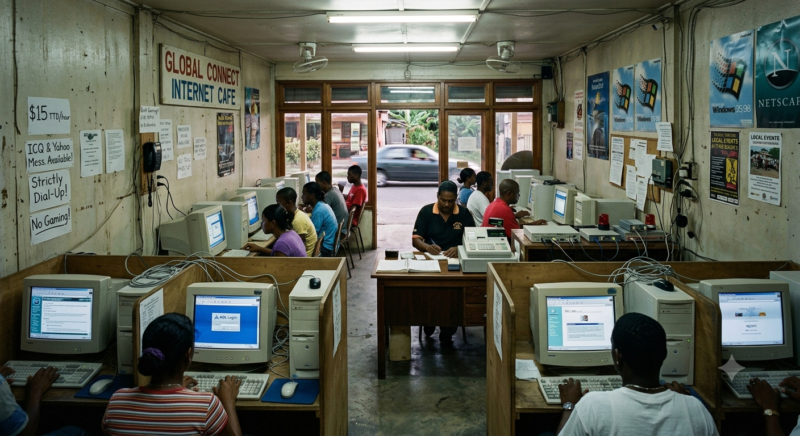
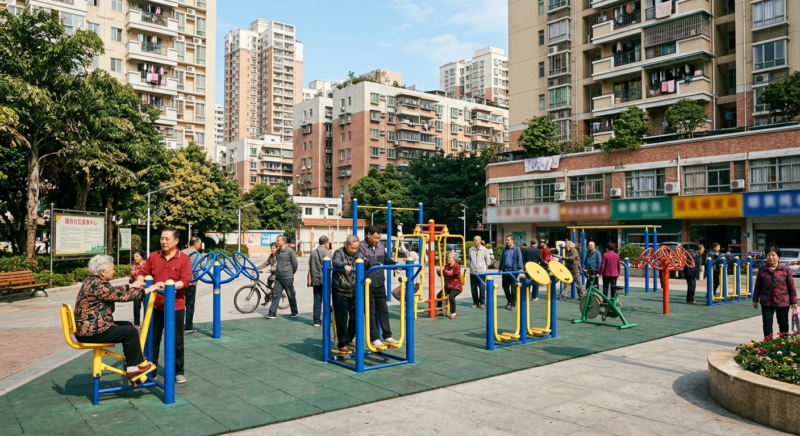
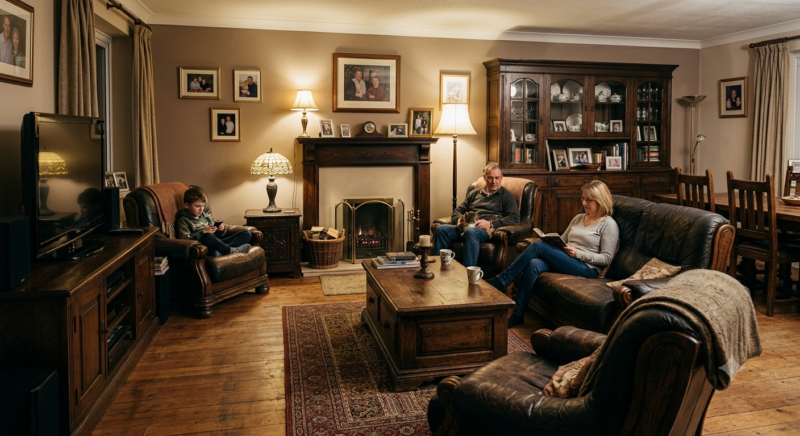
Dreamcore as a broader internet genre is built around liminal spaces — empty malls, motel hallways, playgrounds at odd hours — images that feel both familiar and slightly wrong, like a half-remembered dream. Chinese Dreamcore borrows that dream logic but fills it with specifically Chinese memory: the brightly colored outdoor exercise equipment found in nearly every residential compound, the dark, heavy wood furniture common in family living rooms, blue-glass high-rises going up during the boom years, dial-up internet cafes, and pop culture touchstones like the 2008 Beijing Olympics anthem “Beijing Welcomes You.” Posts in the genre often begin with the same premise: you have somehow traveled back in time and woken up in your childhood home, and the video or photo set walks you through a Saturday morning as if it were 2003, 2006, or 2008 again.
It isn’t just a look. Creators, artists, and cultural commentators increasingly describe it as something closer to therapy — a “cyber sanctuary” or a “digital pain reliever” for a generation under enormous pressure.
What Gave Rise to It
Chinese Dreamcore did not emerge in a vacuum. Its primary audience is Gen Z — young people born in the late 1990s and 2000s who grew up watching China transform at astonishing speed, from a still-developing economy into a global power rivaling the United States. They came of age alongside the internet itself, watching QQ give way to WeChat, dial-up give way to 5G, and their hometowns get demolished and rebuilt as gleaming high-rises.
That speed is precisely the problem. The China many of these young people grew up in has, in a very literal sense, vanished — old neighborhoods torn down, childhood landmarks paved over, entire streetscapes replaced within a decade. At the same time, the promises that used to come with rapid growth haven’t materialized for everyone stepping into adulthood now. Youth unemployment has been stubbornly high, wages have stagnated for many entry-level roles, and competition for good jobs and even for a stable place in the housing market feels relentless. Where their parents’ generation could reasonably expect the economy to keep expanding along a predictable upward line, Gen Z is graduating into something far more uncertain.
Faced with a future that looks murkier than the past, many young Chinese have turned to recreating that past instead. The early 2000s occupy an unusual sweet spot in the collective memory: recent enough to feel personal and vivid, but distant enough — a decade of near-uninterrupted growth — to feel safe, warm, and settled by comparison. Chinese Dreamcore isn’t really about the specific decade at all; it’s about reconstructing a feeling of security that today’s economic and social climate makes harder to access. It sits in a lineage with other nostalgia-driven aesthetic movements around the world, from 1980s revivalism in the West to the wave of media it inspired, but its emotional engine is distinctly local: the vertigo of having grown up inside one of the fastest social transformations in human history.
Why It Resonates With — and Benefits — Gen Z
For young people inside China, Chinese Dreamcore functions as a kind of shared emotional shorthand. A single blurry photo of a schoolyard or a snippet of a half-forgotten jingle can instantly summon a wave of recognition among people who otherwise have very different lives, jobs, and cities. In a period marked by isolation, long working hours, and intense competitive pressure — the so-called “involution” many young Chinese describe feeling trapped in — that shared recognition offers something genuinely valuable: community built on mutual memory rather than mutual striving. It gives people permission to slow down, feel nostalgic, and process anxiety about the present by dwelling briefly in a gentler-feeling past, without needing to explain themselves. Mental health professionals and cultural commentators have noted this soothing, almost meditative function — a low-stakes way of coping that doesn’t require naming or diagnosing the stress driving it.
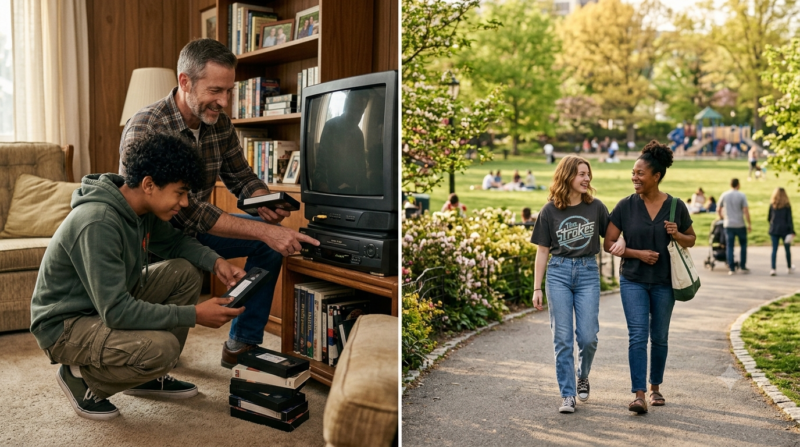
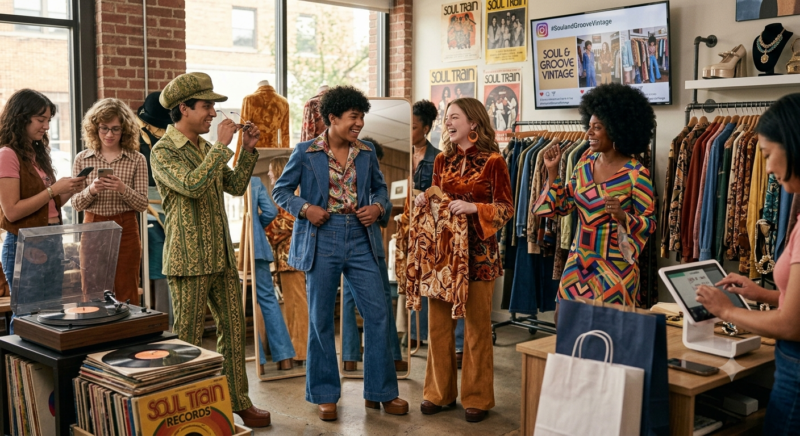
The aesthetic has also become a meaningful creative and even commercial outlet. Independent artists, meme-makers, and video editors have built real audiences producing dreamcore content, while some understand it as a documentary act — preserving visual records of neighborhoods, products, and everyday scenes that are otherwise disappearing without a trace. Brands have started to notice too, using dreamcore-inflected imagery and retro motifs — old apartment blocks, vintage furniture, Windows 98-era interfaces — to connect with younger consumers on an emotional level rather than a purely transactional one.
Beyond China’s borders, the appeal travels easily because the underlying feeling is universal even when the imagery is specific. Gen Z audiences worldwide are navigating similar headwinds: economic uncertainty, a housing market that feels out of reach, information overload, and a sense that childhood ended just as the world sped up around them. Chinese Dreamcore gives international viewers a window into a culture and a decade they may know little about, while offering the same core comfort dreamcore communities everywhere chase — the sense that somewhere, a warmer, slower, more legible version of life is still just barely within reach. It’s a reminder that nostalgia, however specific its details, is one of the more universal languages Gen Z speaks — and that reconstructing the past, pixel by pixel, has become one way an entire generation is learning to sit with an uncertain future.